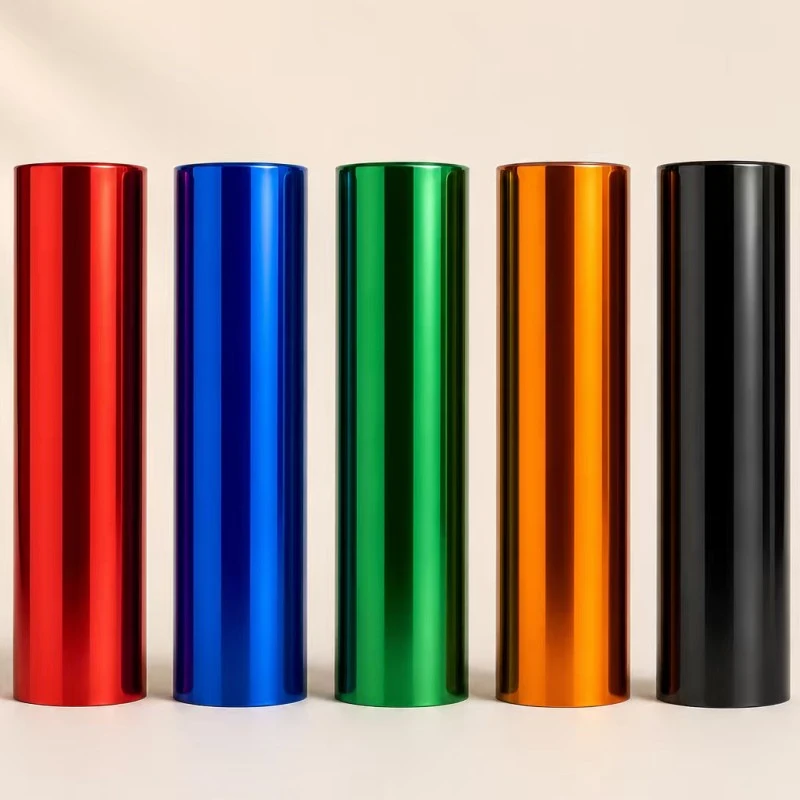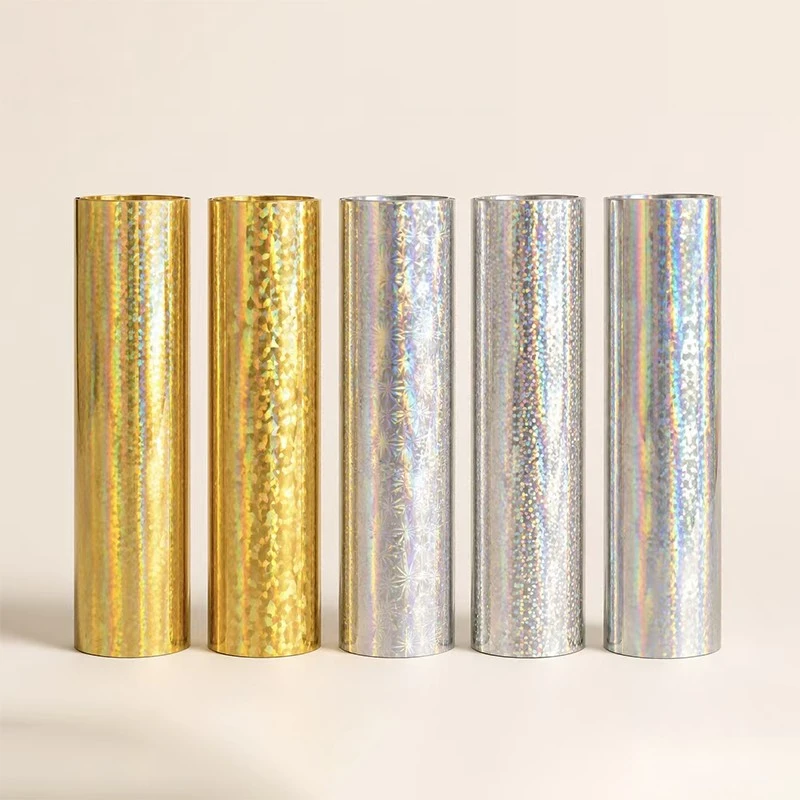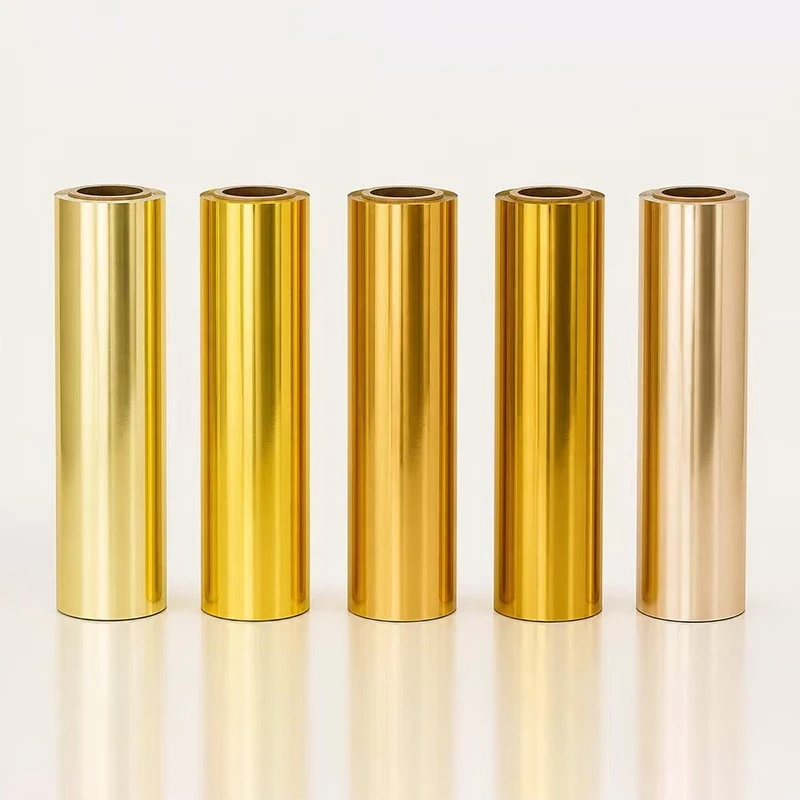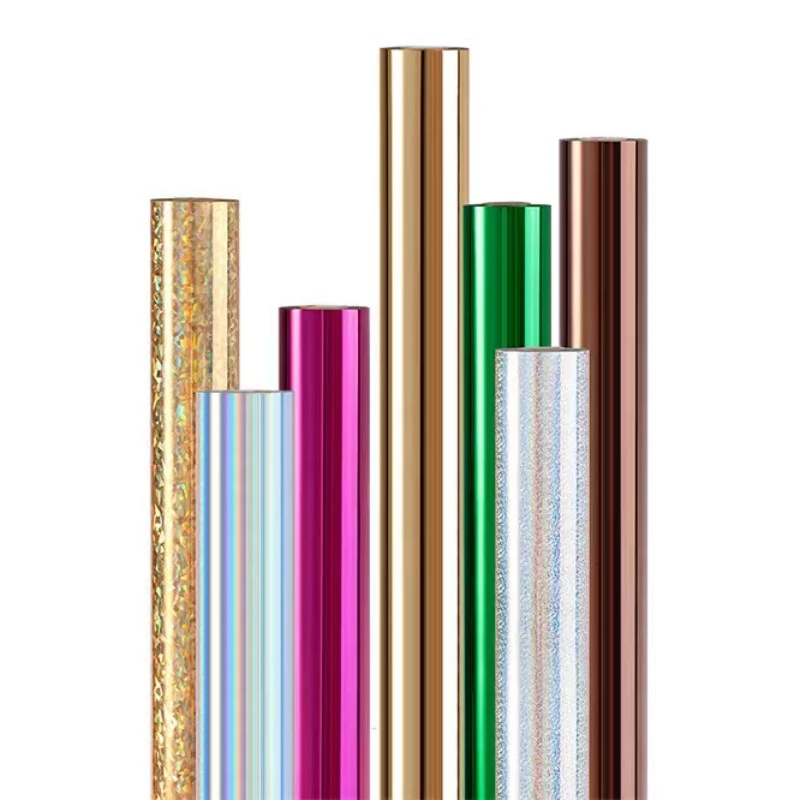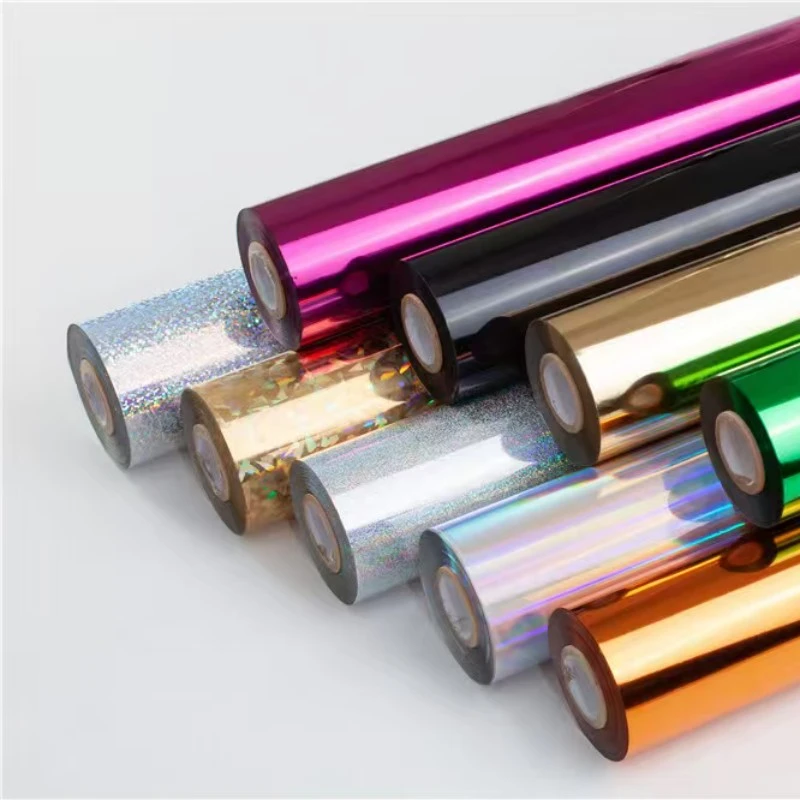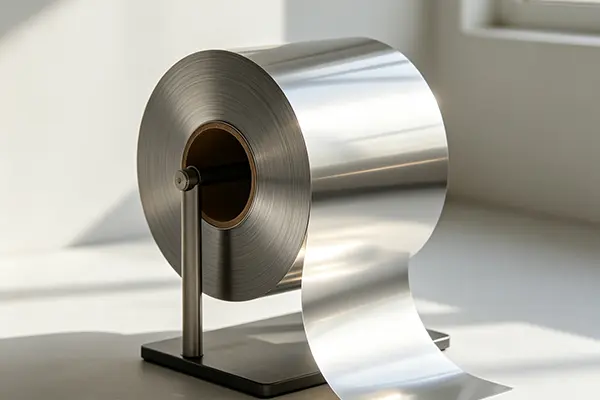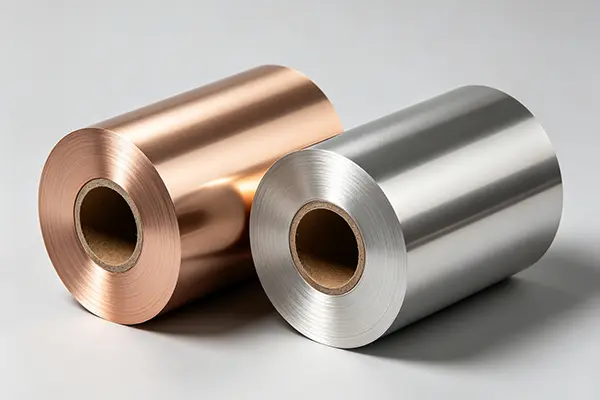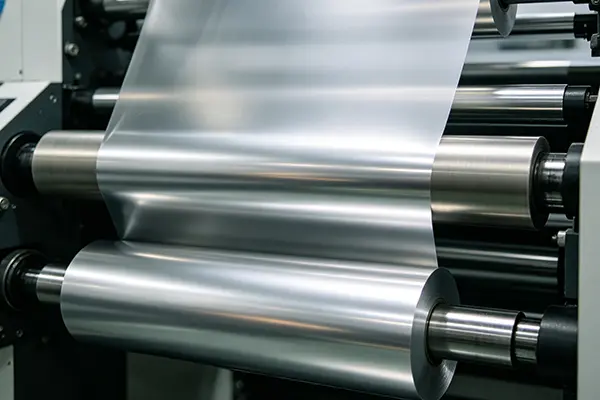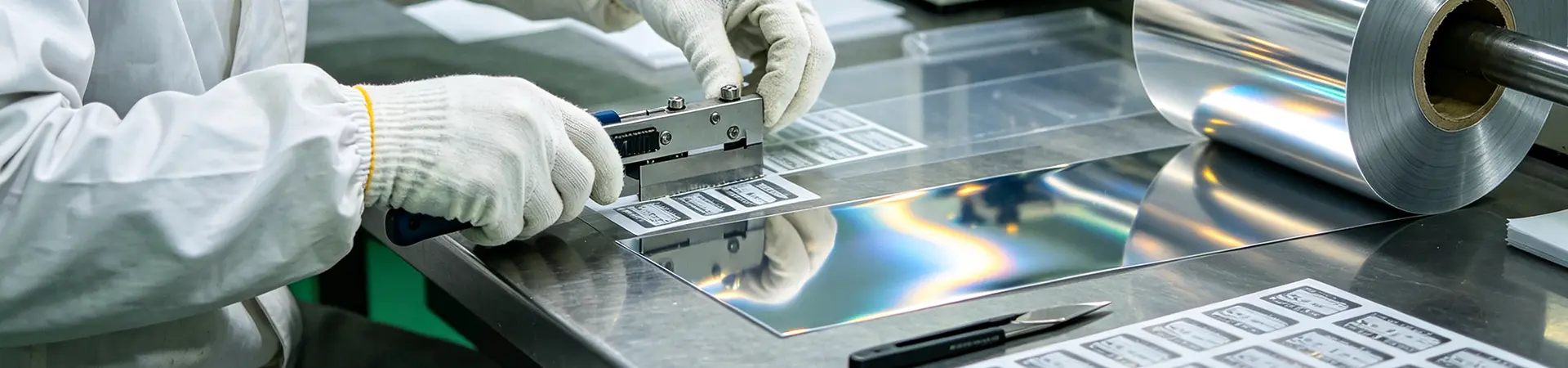
We offer a wide range of hot stamping foils, laser packaging materials, and aluminized films produced with advanced coating, holographic, and vacuum aluminizing technology to meet diverse printing and packaging needs.
In the world of decorative printing and packaging, Hot Stamping Foil is the material that transforms ordinary surfaces into premium, eye-catching finishes. HONGTAI, a trusted manufacturer with decades of coating and converting expertise, supplies hot stamping foil for applications ranging from folding cartons and labels to book covers, greeting cards, and cosmetic packaging.
Hot stamping foil is a multilayer transfer material used in the hot stamping process. The foil is placed between a heated die and the substrate. When the die presses down with controlled temperature and pressure, the heat activates a release coating on the foil carrier. This allows the functional layers, such as the metallic or pigmented color layer and the adhesive layer, to transfer from the polyester carrier film to the target surface. The result is a crisp, permanent, and highly decorative finish that adheres securely to paper, board, plastic, leather, or coated materials.
The quality of hot stamping foil depends on several critical factors: the uniformity of the release layer, the consistency of the color or metal layer, and the compatibility of the adhesive with the substrate. HONGTAI manufacturing processes control these variables through automated coating lines, precision slitting, and strict quality inspection. Each batch is tested for release temperature, adhesion strength, gloss level, and abrasion resistance before shipping.
What materials can hot stamping foil be applied to?
It can be applied to a wide range of materials, including coated and uncoated paper, folding carton board, laminated board, BOPP, PET, PVC, ABS, leather, fabric, and some lacquered metal surfaces. The key is selecting the correct adhesive formulation for the specific substrate. HONGTAI offers substrate-specific foils for paper and board, film labels, plastic parts, and textile applications. For difficult surfaces such as UV-coated stock or PP, a higher tack adhesive or a primer may be required. HONGTAI technical team can recommend the appropriate series and provide testing support to optimize adhesion and edge definition.
What temperature is best?
The optimal stamping temperature generally falls between 120 °C and 150 °C for most HONGTAI products. However, the exact temperature depends on the substrate, the die material, the stamping speed, and the foil type. Too low a temperature can cause incomplete transfer or weak adhesion. Too high a temperature may lead to foil sticking, edge feathering, or damage to heat-sensitive substrates. It is best to start at the lower end of the recommended range and increase gradually while checking the stamped result. Consistent die temperature across the entire image area is also critical. HONGTAI technical data sheets provide a starting temperature range for each series.
What is the difference between hot stamping and cold foil?
Hot stamping uses a heated die and pressure to transfer foil onto the substrate. It produces a high-quality, durable metallic finish and is suitable for both flat and embossed designs. Cold foil, by contrast, is applied using UV adhesive and a printing plate, then cured under UV light. Cold foil can be applied inline on offset presses and is often more economical for very long runs on paper.
Can hot stamping foil be used on food packaging?
Yes, it can be used on food packaging, provided the foil is formulated to meet relevant food safety requirements. HONGTAI offers low odor and migration-safe formulations for indirect food contact applications such as cartons, labels, and wrappers that do not come into direct contact with food. For direct food contact, specific compliance documentation and testing are required. HONGTAI can supply technical data sheets and support documentation to help you verify compliance with regional regulations. Always confirm the intended use and regulatory requirements with your packaging compliance team before specifying a foil for food contact applications.
What causes incomplete foil transfer?
Incomplete foil transfer is usually caused by insufficient heat, pressure, or dwell time, or by a mismatch between the foil adhesive and the substrate. Other common causes include a worn or uneven die, poor die alignment, contaminated substrate surface, or a foil that has been stored improperly and lost its release characteristics. If you experience incomplete transfer, check the die temperature distribution and increase it in small increments. Verify that the stamping pressure is uniform across the entire image area. Clean the substrate to remove dust, oil, or silicone residues. If the problem persists, test a different HONGTAI series with a stronger adhesive or a faster release formulation. Detailed troubleshooting support is available from the HONGTAI technical team.
Does HONGTAI offer custom colors and widths?
Yes, HONGTAI provides custom color matching for metallic, pigment, and holographic hot stamping foil. You can submit a physical sample, a Pantone reference, or a digital color specification, and the HONGTAI color lab will develop a matched formula. Custom widths are also available to minimize waste and improve material utilization. Standard roll widths range from 610 mm to 1,500 mm, but slitting can be done to your exact specification with tolerances of ±0.5 mm for most products. Minimum order quantities for custom colors and widths depend on the product type and production volume. Contact HONGTAI with your requirements for a quotation and lead time.